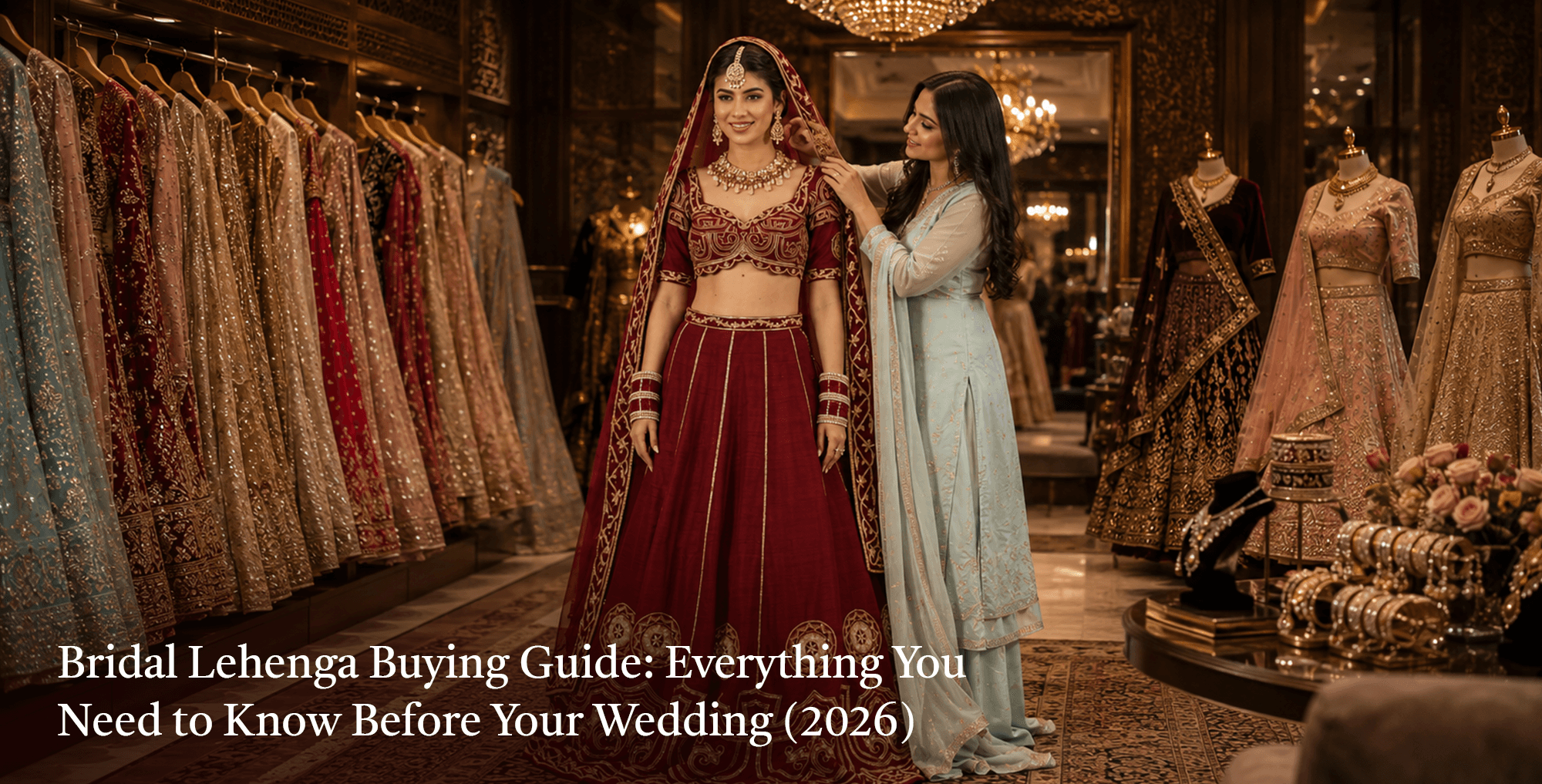
Bridal Lehenga Buying Guide: Everything You Need to Know Before Your Wedding
A bridal lehenga is more than a wedding outfit—it's a reflection of your personality, heritage, and the memories you'll cherish for years to come. Whether you're planning an intimate ceremony or a grand celebration, choosing the right lehenga is one of the most exciting parts of your wedding journey.
With countless styles, fabrics, colours, and embroidery techniques available today, selecting the perfect bridal lehenga can feel overwhelming. This guide will help you understand what truly matters, allowing you to invest in a piece that combines elegance, comfort, and timeless craftsmanship.
At Jind Mahia, we celebrate handcrafted Indian ethnic wear rooted in tradition and designed for the modern woman.
"A handcrafted bridal lehenga isn't just worn for a day—it's an heirloom woven with heritage, elegance, and memories meant to last generations."
Why Choosing the Right Bridal Lehenga Matters
Your wedding day includes hours of ceremonies, photographs, celebrations, and unforgettable moments. Your lehenga should make you feel confident and comfortable from the first ritual to the final farewell.
The right bridal lehenga should:
- Complement your personality and personal aesthetic
- Reflect the style and scale of your wedding
- Feel comfortable throughout hours of festivities
- Highlight traditional Indian craftsmanship and artistry
- Become a timeless keepsake to pass down
Rather than following every short-lived trend, choose a design that feels authentically yours.
Quick Reference: Silhouette, Fabric & Function Matrix
| Silhouette | Ideal Fabrics | Best Suited Body/Vibe | Wedding Function |
|---|---|---|---|
| A-Line | Pure Silk, Raw Silk | Universal / Timeless Elegance | Traditional Wedding |
| Circular (Flared) | Organza, Heavy Silk, Velvet | Grand / Regal / Twirl-worthy | Main Ceremony / Reception |
| Panelled (Kali) | Georgette, Lightweight Silk | Graceful / Contemporary Flow | Pheras / Intimate Wedding |
| Mermaid | Velvet, Structured Silk | Sculpted / Modern Statement | Reception / Evening Gala |
Step 1: Choose a Silhouette That Flatters You
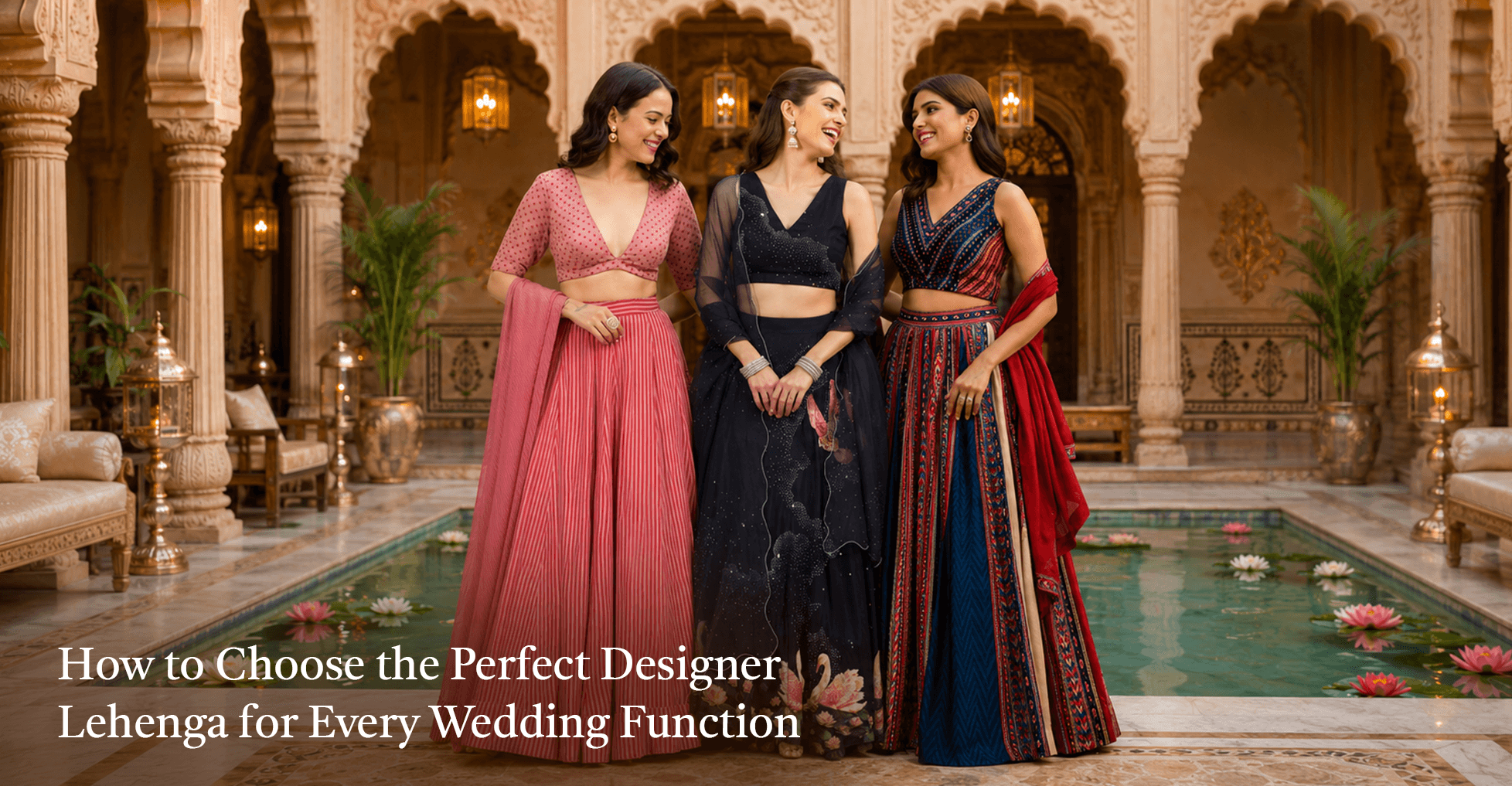
Different lehenga silhouettes create distinct visual structures and suit different personal styles.
A-Line Lehenga
A universally flattering silhouette that gently flares from the waist, creating a balanced and elegant appearance.
- Best for: Traditional weddings, most body shapes, and brides seeking timeless elegance.
Circular (Flared) Lehenga
Known for its dramatic volume and graceful movement, this style is ideal for grand wedding celebrations.
- Best for: Traditional ceremonies, brides who love a regal look, and those signature twirling wedding photographs.
Panelled (Kali) Lehenga
Constructed with multiple vertical fabric panels, this silhouette offers beautiful movement without excessive weight.
- Best for: Contemporary brides, lightweight comfort, and elegant fluid flow.
Mermaid Lehenga
Fitted through the waist and hips before flaring gracefully at the knees, creating a modern, sculpted silhouette.
- Best for: Reception events, evening celebrations, and brides looking for a sophisticated, modern statement.
Step 2: Select the Right Fabric
Fabric influences the drape, structure, comfort, and ultimate photographability of your bridal look.
- Silk: Celebrated for its luxurious texture, structural weight, and timeless sheen. Perfect for classic bridal looks and rich, heavy embroidery.
- Organza: Lightweight with a delicate, ethereal sheen. Ideal for day weddings, summer celebrations, and soft layered designs.
- Velvet: Adds unmatched richness, depth, and royal grandeur. Best suited for evening ceremonies, cooler climates, and winter weddings.
- Cotton-Silk Blends: Combines breathability with understated elegance, making it ideal for intimate celebrations and destination weddings.
Step 3: Understand Embroidery Techniques
Handcrafted embroidery is what transforms a beautiful piece of fabric into a work of wearable art.
Popular artisan techniques to look for include:
- Zardozi: Intricate metallic threadwork historically reserved for royalty.
- Dori Work: Raised cord embroidery creating textured, striking patterns.
- Thread & Resham Embroidery: Fine silk threadwork offering rich color depth.
- Mirror & Sequins: Reflective detailing designed to catch warm wedding lighting.
- Beadwork: Delicate glass or metallic embellishments adding subtle weight and sparkle.
At Jind Mahia, craftsmanship is at the heart of every design, celebrating India's rich textile heritage through meticulous hand-detailing.
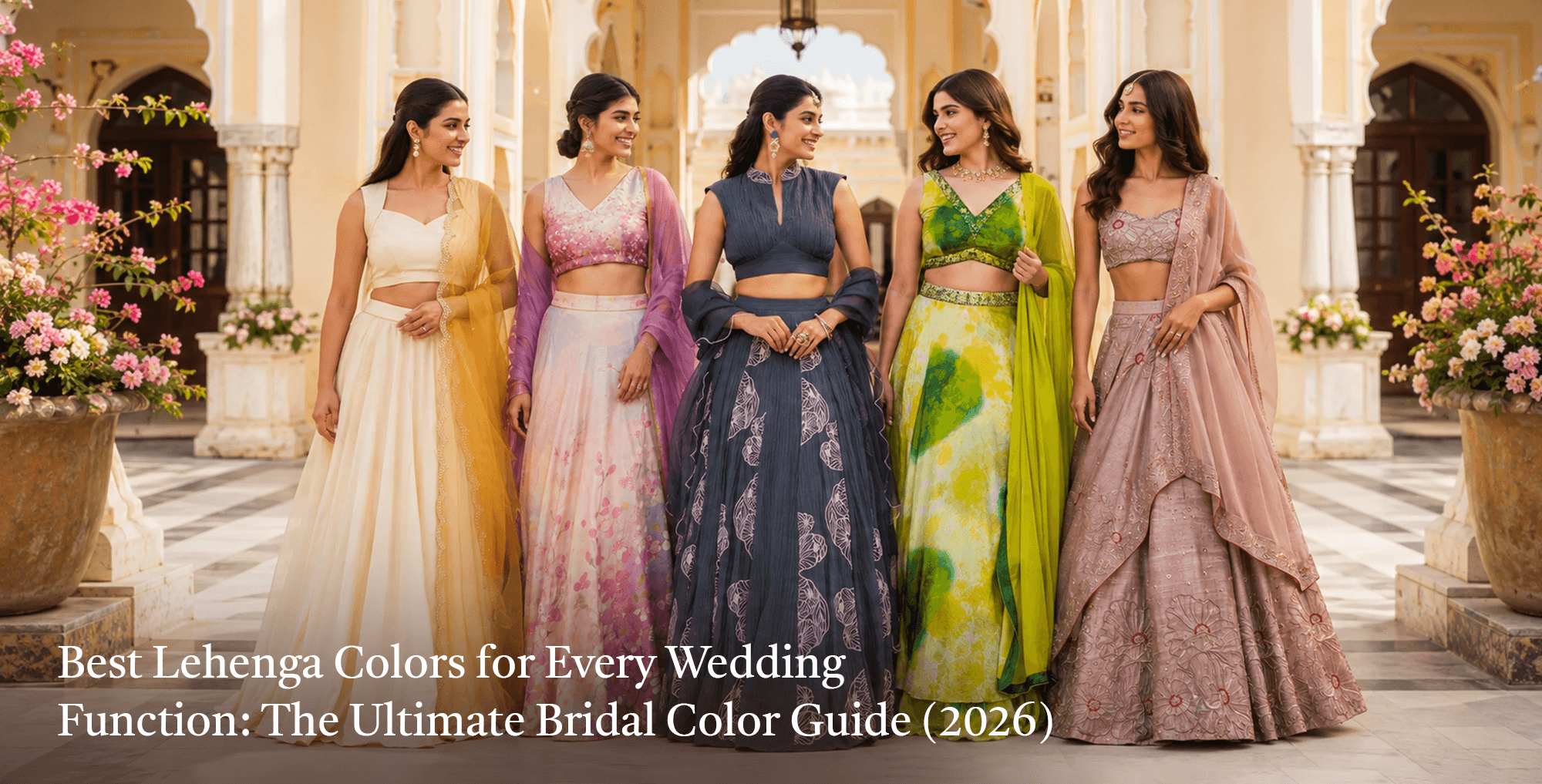
Step 4: Choosing the Perfect Colour
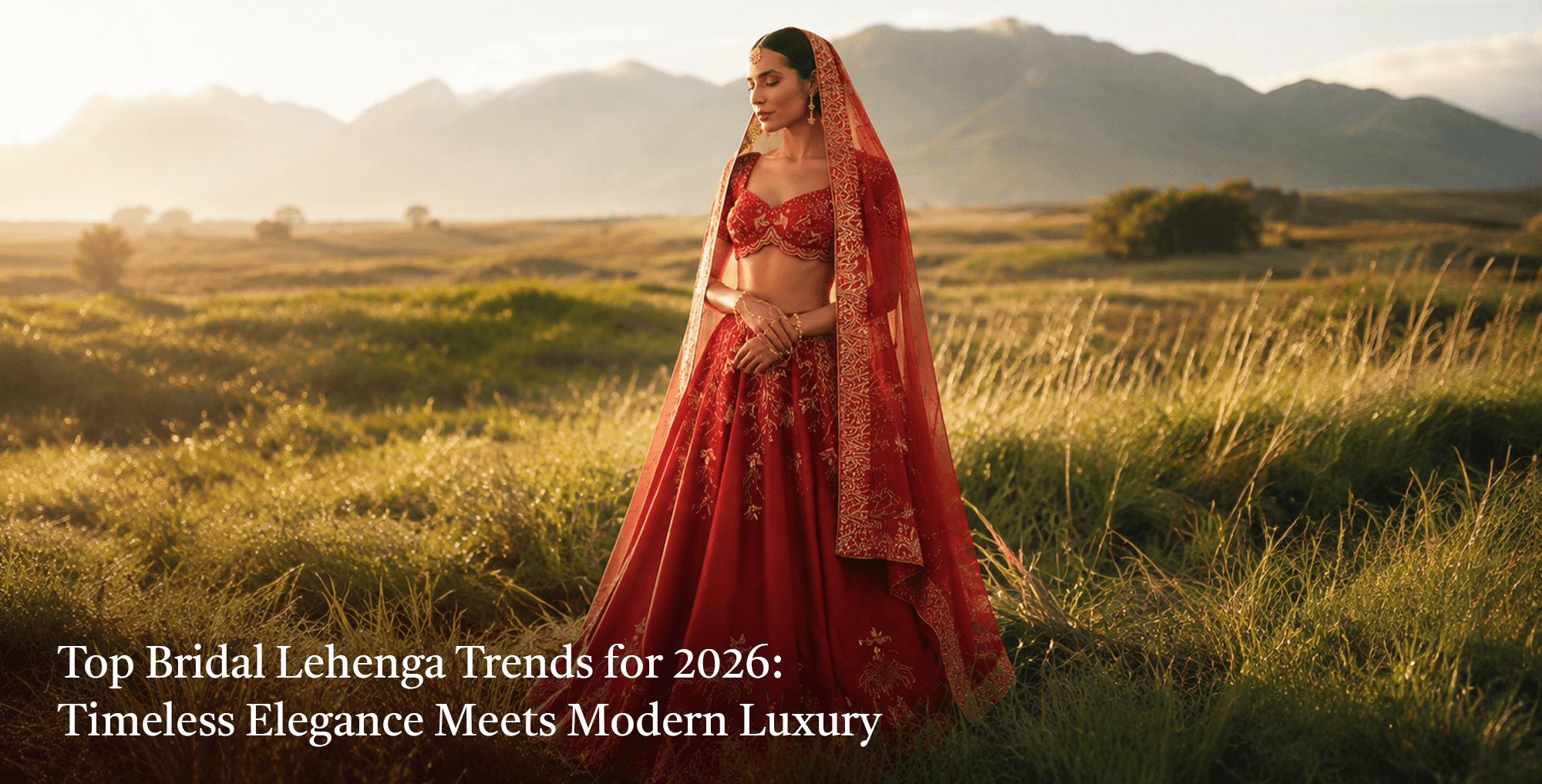
While classic crimson and deep maroons remain iconic, modern brides are expanding their color palettes across day and night events.
- Classic Royalty: Crimson Red, Deep Maroon, and Royal Gold
- Ethereal & Soft: Ivory, Blush Pink, Pastel Peach, and Champagne
- Jewel Tone Statements: Emerald Green, Deep Wine, and Royal Blue
Style Tip: Choose a colour that harmonizes with your skin undertone, target jewellery metals (Kundan, Polki, or Diamond), and your overall venue decor palette.
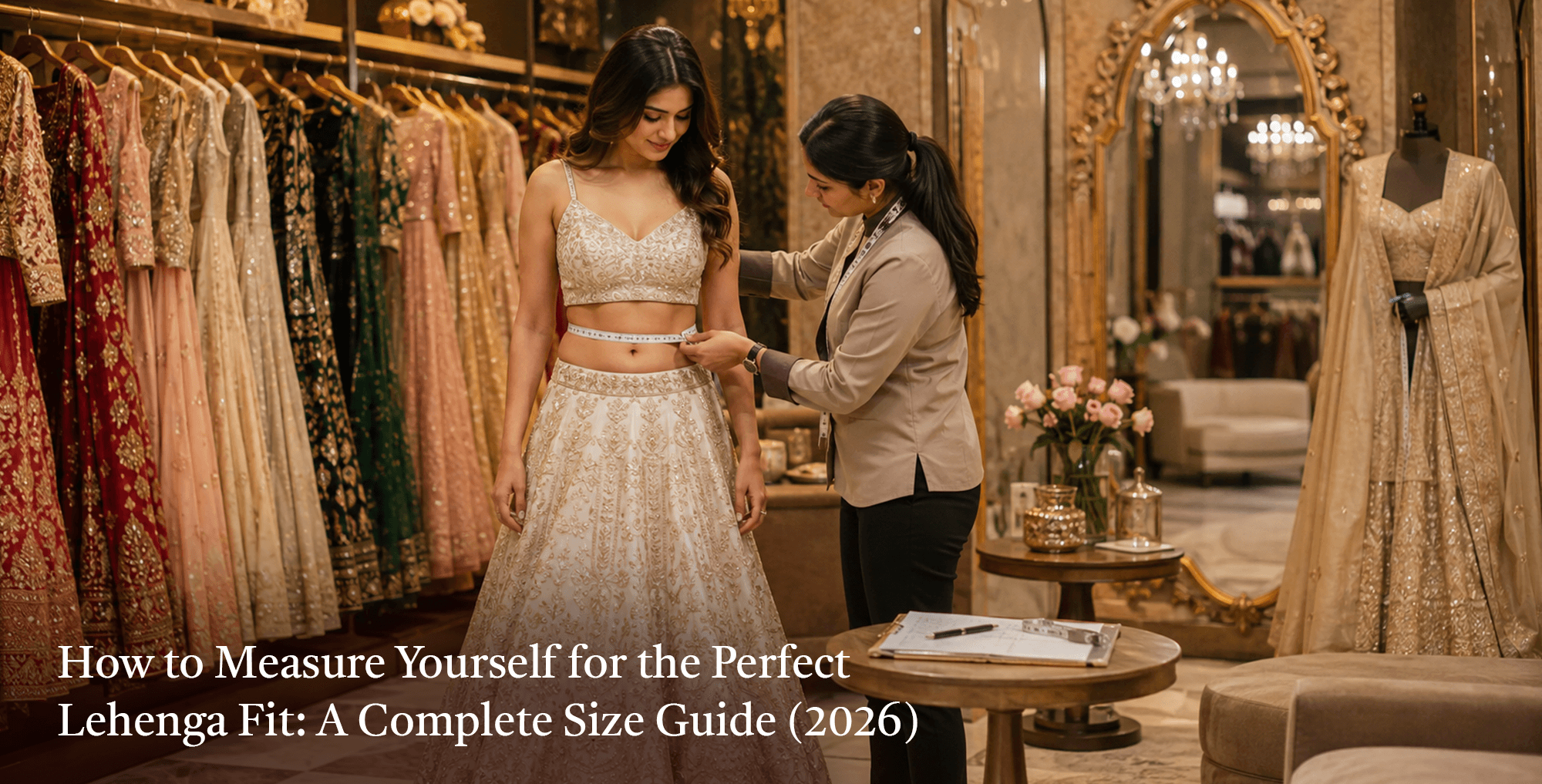
Step 5: Focus on Fit and Structural Comfort
A beautifully crafted lehenga should fit effortlessly while allowing total freedom of movement throughout the day.
During your trial and fitting stages, pay close attention to:
- Blouse Construction: Check for bust support, armhole mobility, and non-abrasive inner finishing along structural seams.
- Waistline Comfort: Ensure the waistband sits securely at your natural waist without pinching or pulling.
- Skirt Length: Tailor the hemline to match your exact wedding shoe height to prevent tripping or dragging.
- Dupatta Weight: Balance heavily embellished dupattas with lighter, secondary veil dupattas for ease of head draping.
Professional alterations and custom tailoring are essential to ensure your bridal outfit feels like a second skin.
Step 6: Balance Style and Wearability
Your wedding day involves standing, sitting for rituals, walking, and dancing across many hours. Comfort should never be compromised for style.
Ensure your designer piece incorporates:
- Breathable Lining: Soft cotton or fine silk linings underneath heavy skirts.
- Lightweight Can-Can: Tiered, removable, or structured net framing that creates volume without excessive weight.
- Balanced Embroidery Placement: Densest detailing placed towards the hem rather than heavy embellishments resting directly on points of friction.
Accessories That Complete the Look
Complement your bridal lehenga with curated accessories to create a cohesive aesthetic:
- Jewellery: Statement Kundan, Polki, or heritage temple gold pieces.
- Draping: Secondary lightweight net/organza dupattas for head draping.
- Footwear: Padded zardozi jutis or comfortable block heels for long wear.
- Potli & Accessories: Embroidered matching potli bags and hair adornments.
Caring for Your Bridal Lehenga
Your bridal outfit is an investment piece meant to be preserved as a family heirloom.
Care & Preservation Protocol
- Professional Care: Dry clean only through specialized couture garment preservers.
- Breathable Storage: Store inside a pure cotton or muslin garment bag—never plastic or vinyl.
- Acid-Free Tissue: Layer acid-free tissue paper within heavy folds to protect zardozi and foil work from oxidizing or snagging.
- Environment: Keep stored in a cool, dark, and dry wardrobe away from direct sunlight and humidity.
- Periodic Airing: Refold and air out the lehenga once every few months to prevent permanent creasing.
Frequently Asked Questions
Which fabric is best for a bridal lehenga?
Pure silk, velvet, organza, and premium cotton-silk blends are all exceptional choices. The best option depends on your wedding season, venue climate, and comfort preferences.
How far in advance should I choose my bridal lehenga?
It is best to start shopping 3 to 6 months prior to your wedding date to allow adequate time for handcrafting, custom sizing, and final trial fittings.
Are handcrafted lehengas worth the investment?
Yes. Handcrafted lehengas showcase centuries-old artisan techniques, superior structural durability, and unmatched detail, making them timeless pieces that hold value for generations.
Which colour is most popular for bridal lehengas?
While traditional crimson reds and deep maroons remain perpetual favourites, modern brides frequently choose ivory, champagne gold, blush pink, and rich emerald green tones.
How should I store my bridal lehenga after the wedding?
Store your cleaned lehenga inside a breathable cotton garment bag using acid-free tissue paper between folds. Keep it in a temperature-regulated space away from direct light.
Explore More from Jind Mahia
Ready to begin your bridal journey? Discover our handcrafted collections rooted in conscious luxury and Indian craft: