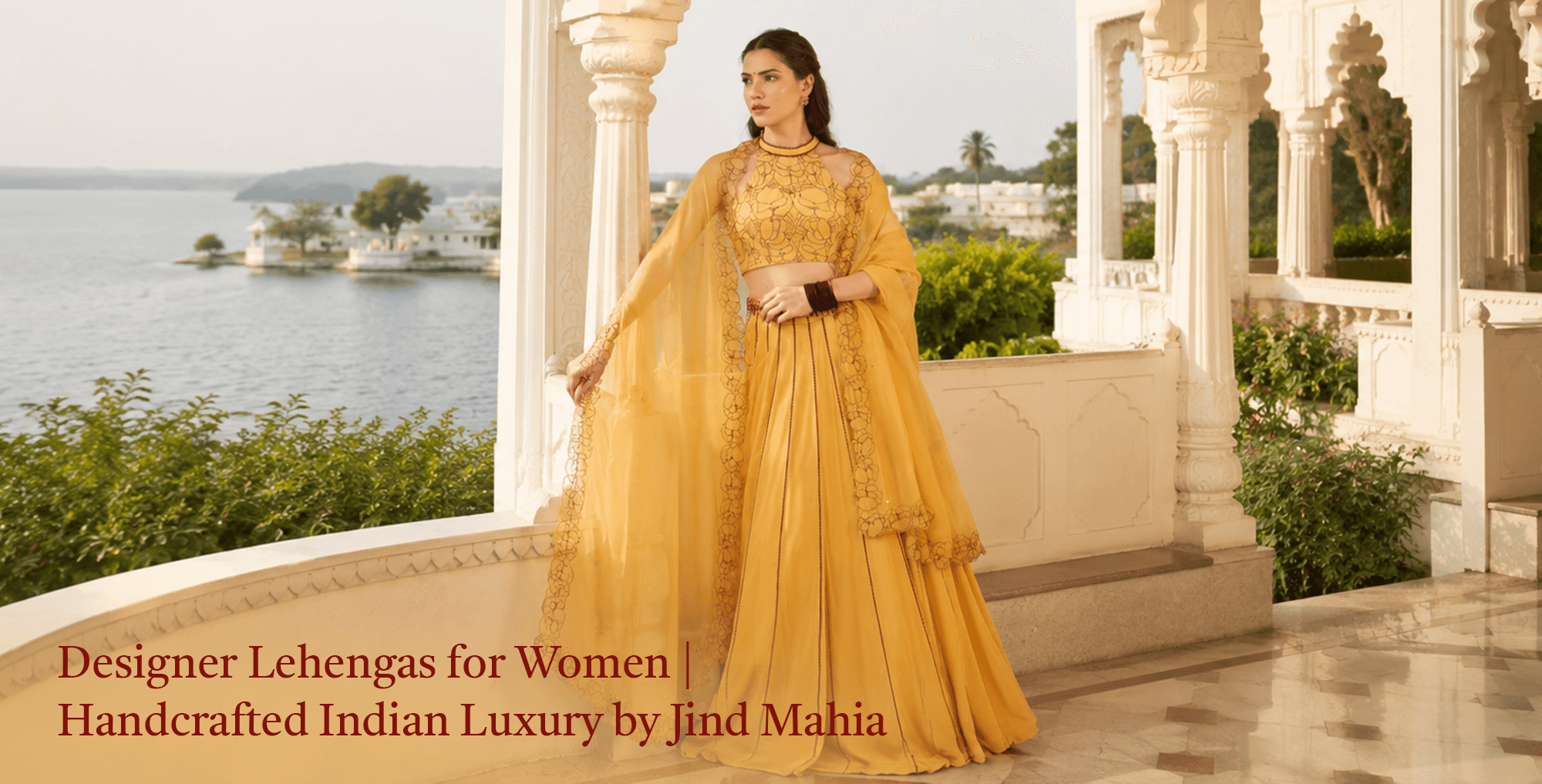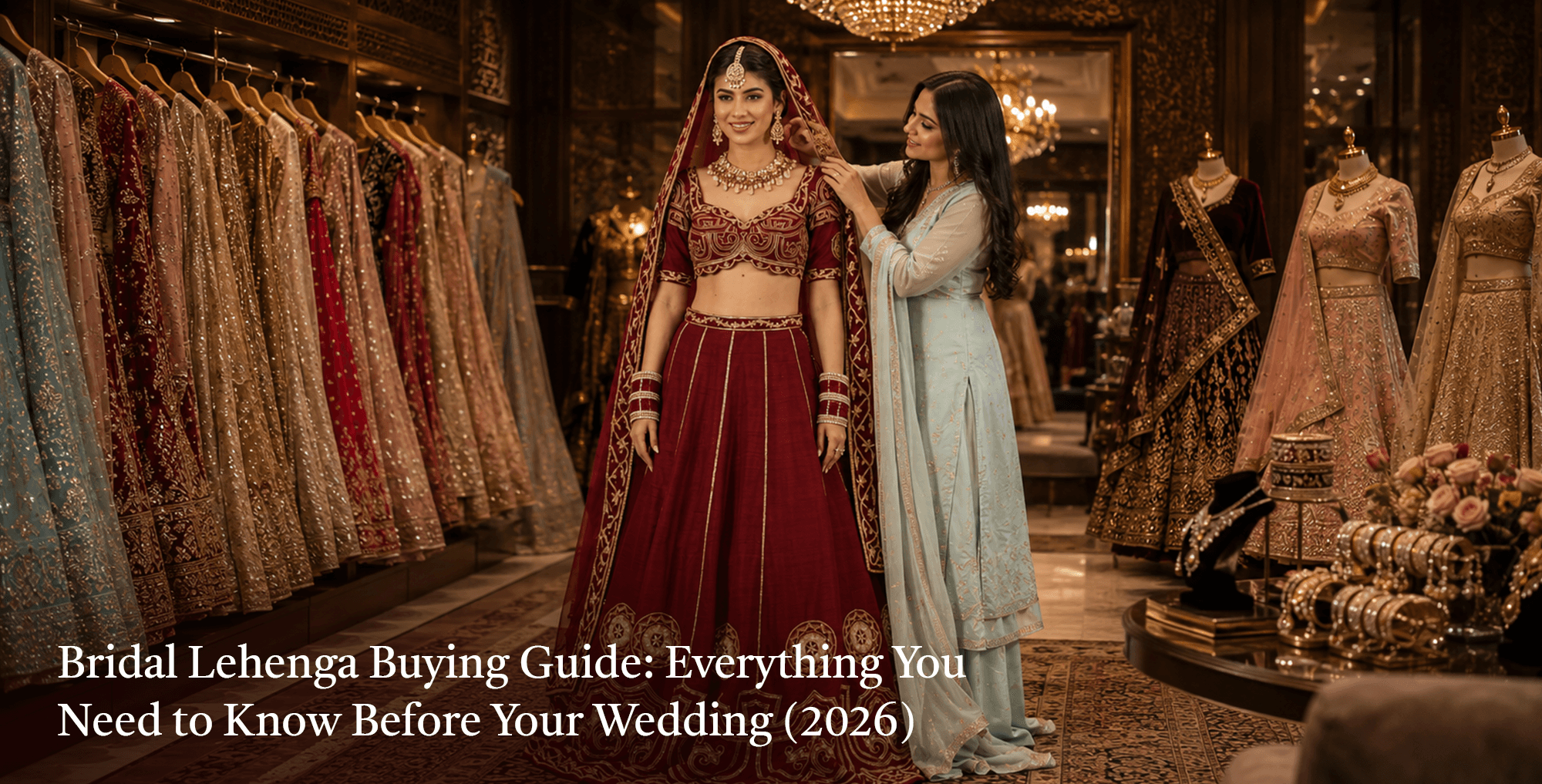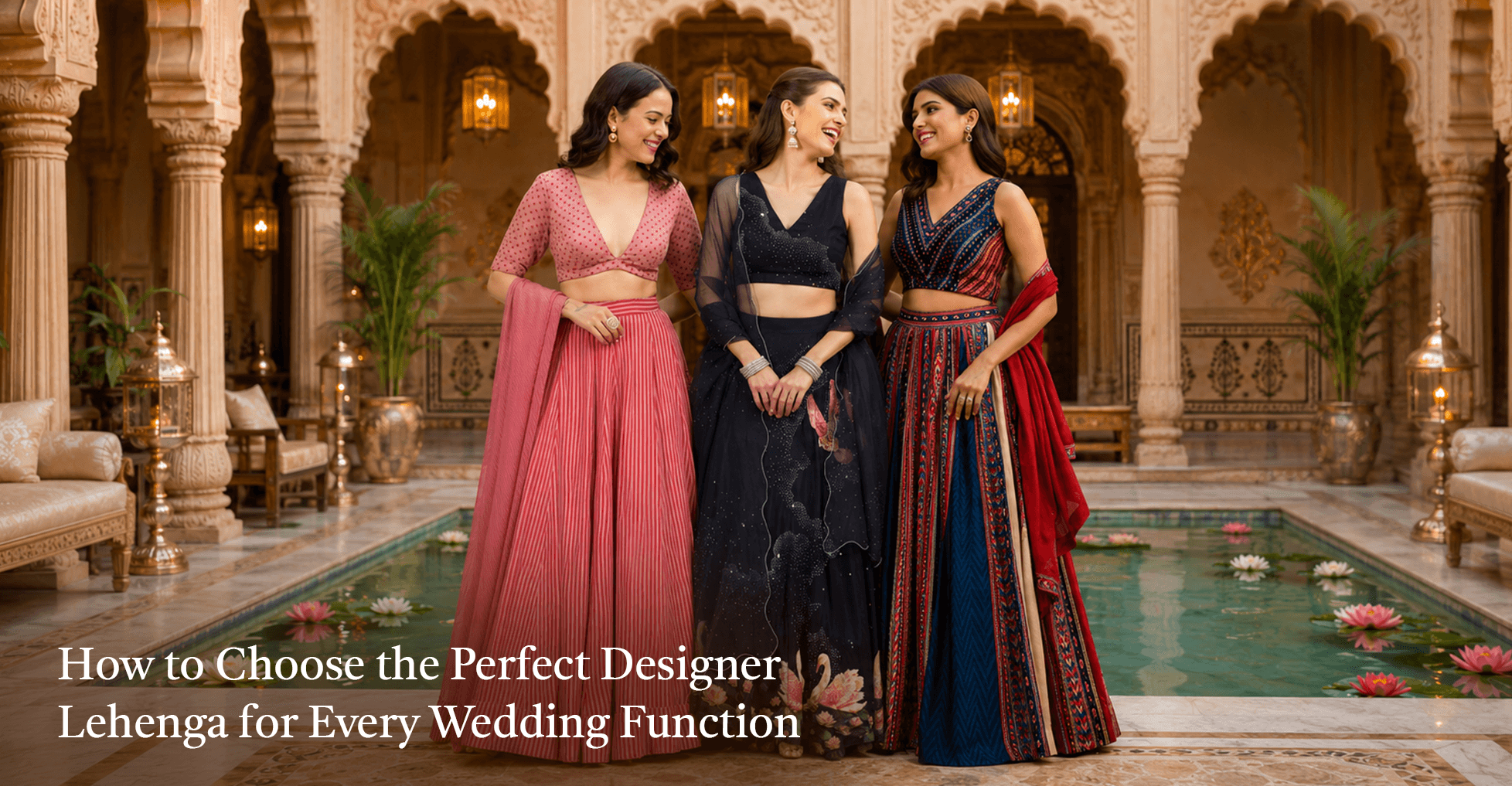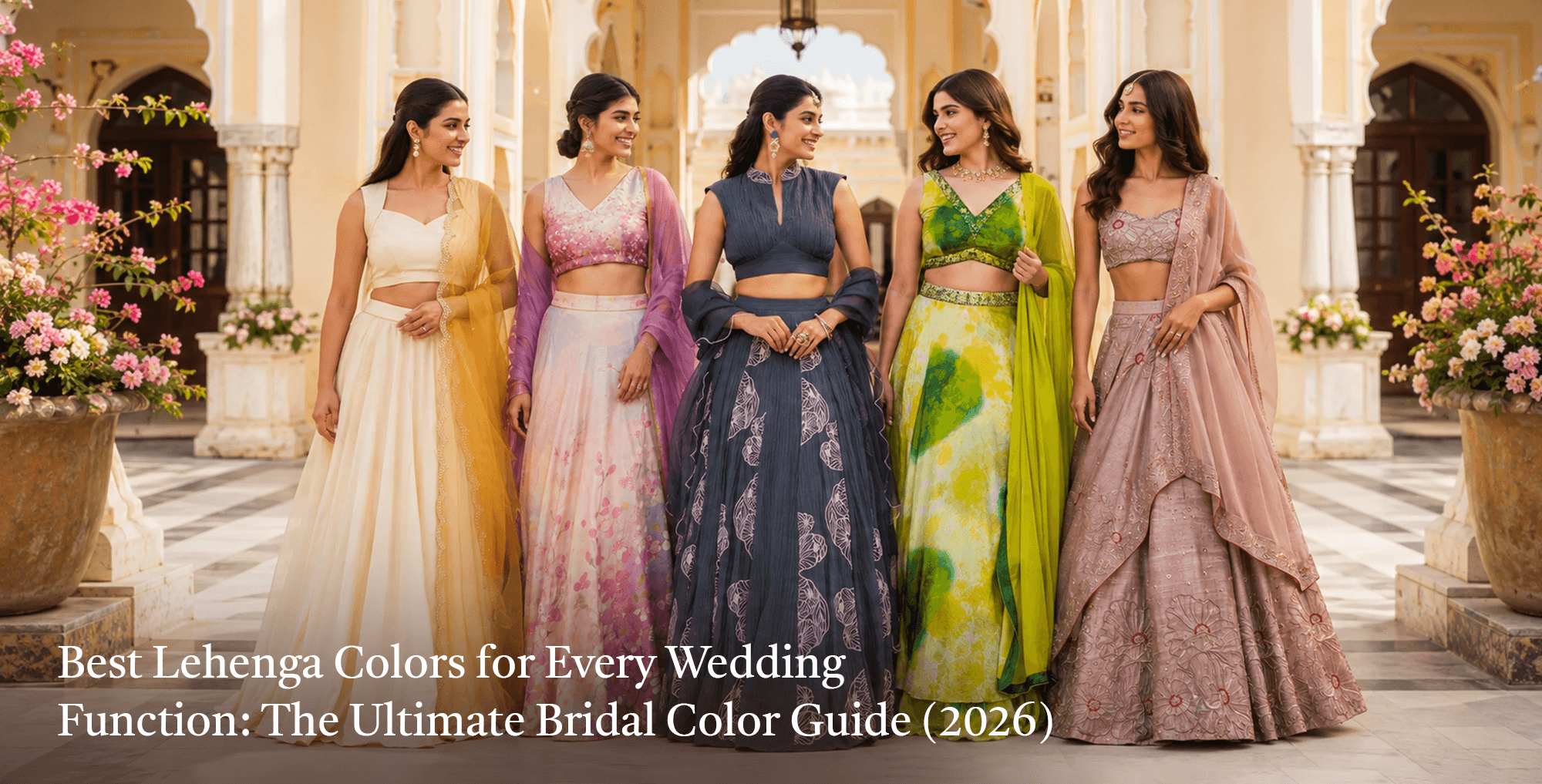
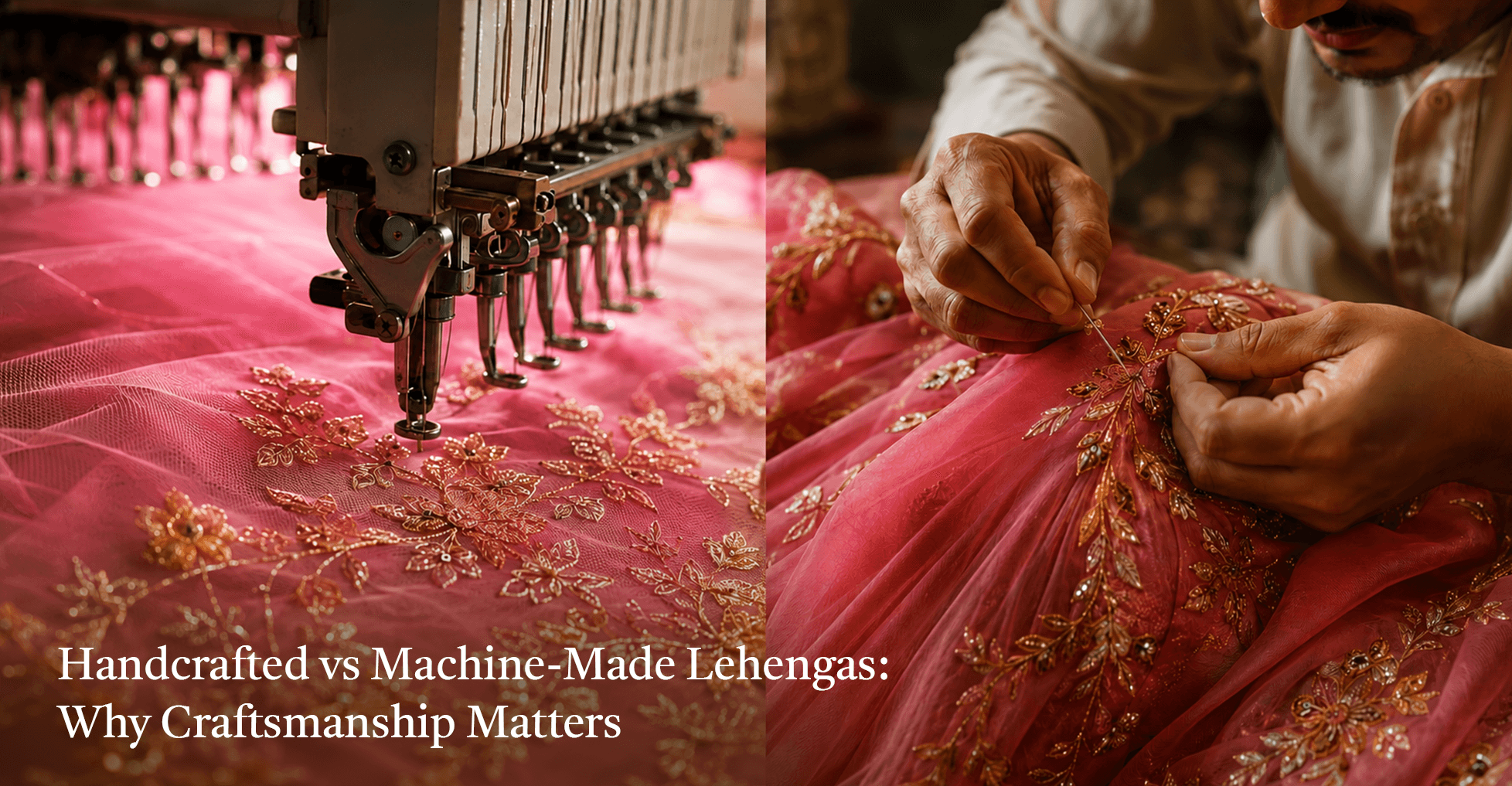
A designer lehenga is often one of the most treasured pieces in a woman's wardrobe. Whether it's worn for a wedding, a festive celebration, or a family milestone, the right lehenga becomes part of cherished memories.
Today, shoppers have more choices than ever before. While machine-made garments dominate fast fashion, handcrafted lehengas continue to represent artistry, heritage, and timeless luxury. Understanding the difference between the two helps you make an informed investment—one that reflects quality, craftsmanship, and lasting value.
At Jind Mahia, every collection is inspired by India's rich textile traditions and our belief in Rooted in Craft. Conscious Luxury.
What Is a Handcrafted Lehenga?
A handcrafted lehenga is created through skilled artisan techniques rather than mass production.
Each garment is carefully developed through multiple stages, including:
- Fabric selection
- Pattern development
- Cutting
- Hand embroidery
- Surface embellishment
- Finishing
- Quality inspection
Because every piece is touched by experienced artisans, no two handcrafted lehengas are ever completely identical. These subtle variations are not flaws—they are part of the garment's unique character.
What Is a Machine-Made Lehenga?
Machine-made lehengas are manufactured in large quantities using automated production methods.
They often feature:
- Standardised designs
- Uniform embroidery
- Faster production
- Lower manufacturing costs
- High-volume inventory
While they may be suitable for everyday fashion, they generally lack the individuality, detailing, and craftsmanship found in handcrafted garments.
Key Differences
1. Craftsmanship
The most significant difference lies in the level of craftsmanship.
- Handcrafted: Every stitch, embellishment, and finish reflects the skill of experienced artisans who have spent years mastering traditional techniques.
- Machine-Made: Machines produce identical patterns repeatedly, focusing on speed and consistency rather than artistic expression.
2. Attention to Detail
Luxury is often found in the smallest details.
Handcrafted lehengas showcase:
- Intricate embroidery
- Thoughtful finishing
- Carefully balanced proportions
- Precision in every element
Machine production rarely achieves the same level of refinement.
3. Fabric Quality
Premium fabrics play an important role in how a lehenga feels and performs.
Handcrafted collections often feature carefully selected materials such as:
- Silk
- Organza
- Cotton Silk
- Chanderi
- Handwoven textiles
These fabrics provide graceful movement, comfort, and longevity while highlighting traditional Indian craftsmanship.
4. Longevity
Fast-fashion garments are often designed for short-term use.
Handcrafted lehengas are created to become heirloom pieces that can be treasured, restyled, and worn across multiple celebrations. When cared for properly, a handcrafted garment can remain beautiful for many years.
5. Supporting Skilled Artisans
Choosing handcrafted fashion means supporting the people behind the craft.
Every handcrafted garment helps preserve traditional textile techniques and provides meaningful opportunities for artisan communities who continue to keep India's heritage alive. Your purchase contributes to sustaining craftsmanship that has been passed down through generations.
6. Conscious Luxury
Luxury today is no longer defined only by price.
Modern luxury also values:
- Quality over quantity
- Timeless design
- Responsible craftsmanship
- Thoughtful production
- Lasting wardrobes
This philosophy forms the foundation of conscious luxury. Instead of purchasing garments designed to be replaced every season, conscious consumers invest in beautifully made pieces that remain relevant for years.
Why Handcrafted Fashion Never Goes Out of Style
Fashion trends evolve, but craftsmanship remains timeless.
A well-made handcrafted lehenga offers:
- Elegant silhouettes
- Premium construction
- Versatile styling
- Long-lasting quality
- Emotional value
Rather than chasing seasonal trends, these pieces become part of your personal story.
How to Identify a Handcrafted Lehenga
When shopping for luxury ethnic wear, look for signs of genuine craftsmanship:
- Fine embroidery with natural variation
- High-quality fabrics
- Clean finishing
- Balanced proportions
- Detailed construction
- Thoughtful design
- Brand transparency about artisan work
These characteristics distinguish handcrafted garments from mass-produced alternatives.
Why Jind Mahia Celebrates Craft
At Jind Mahia, every collection reflects our commitment to preserving India's textile heritage while creating contemporary ethnic wear for the modern woman.
Our designs are created with respect for traditional craftsmanship, premium materials, and timeless elegance. Rather than producing fashion for a single season, we believe in creating garments that celebrate life's most meaningful moments.
Frequently Asked Questions
Are handcrafted lehengas more expensive?
Handcrafted garments often require significantly more time and skilled labour. While they may cost more than mass-produced alternatives, they typically offer greater quality, durability, and uniqueness.
How long does it take to create a handcrafted lehenga?
The time depends on the complexity of the embroidery, fabric, and finishing. Intricate handcrafted garments may take several days or even weeks to complete.
Can handcrafted lehengas be worn more than once?
Absolutely. Their timeless design allows them to be restyled with different jewellery, blouses, or dupattas for multiple occasions.
Why do handcrafted garments have slight variations?
Small variations are a natural result of artisan craftsmanship and are considered a mark of authenticity rather than a defect.
Explore Handcrafted Luxury
If you're looking for timeless Indian ethnic wear that celebrates exceptional craftsmanship, explore our Designer Lehengas Collection and discover garments created with artistry, heritage, and conscious luxury at their heart.