
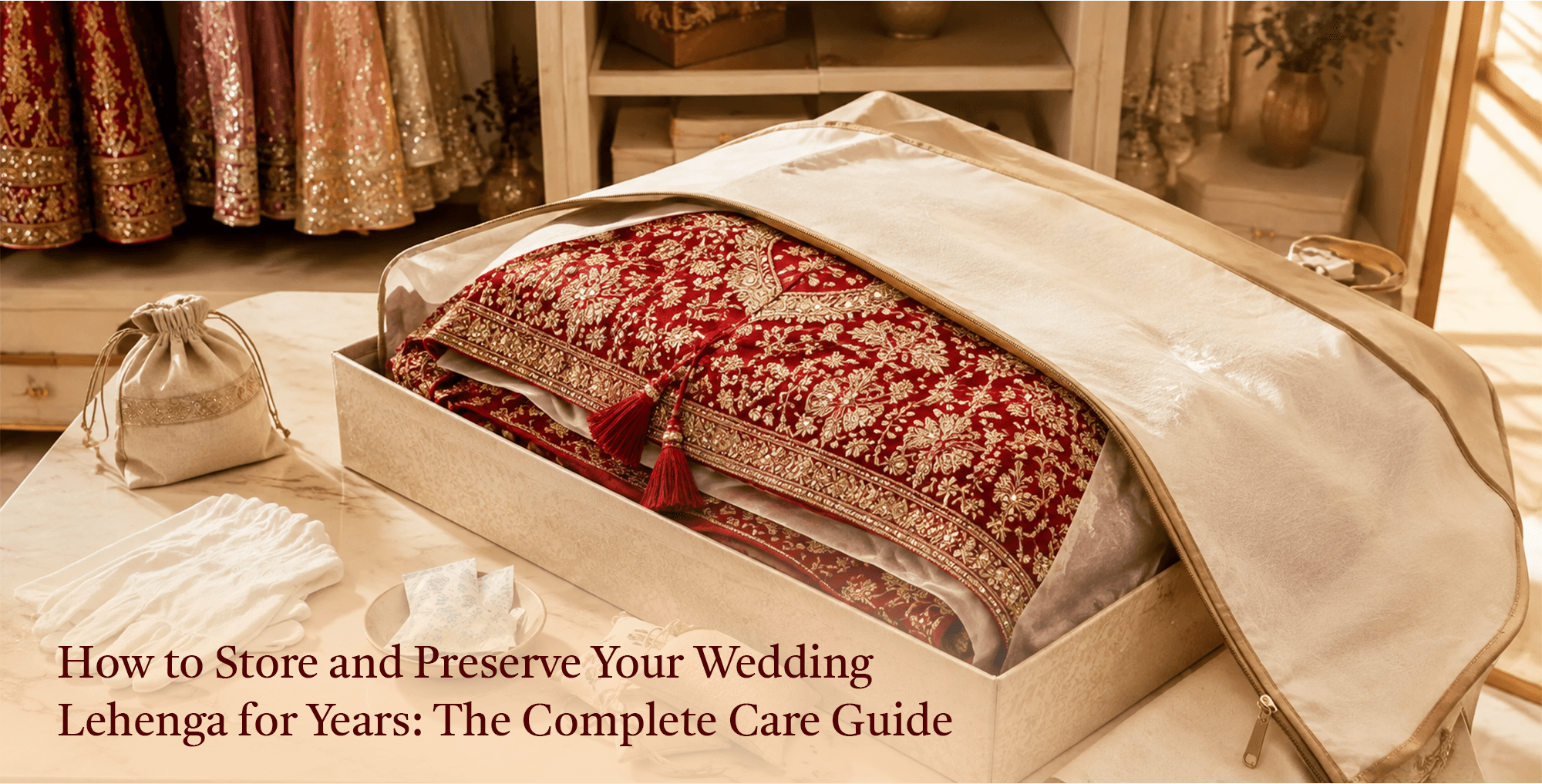
Your wedding lehenga is more than a beautiful outfit—it's a cherished memory woven into fabric. Every thread, embroidery detail, and handcrafted motif tells the story of one of the most important days of your life.
Whether you plan to pass your bridal lehenga down as a family heirloom or simply preserve it as a treasured keepsake, proper care is essential. Premium fabrics such as silk, velvet, organza, and intricate hand embroidery require thoughtful handling to maintain their structural beauty over time.
At Jind Mahia, every handcrafted lehenga is created with timeless craftsmanship. With the right care, it can remain as elegant years later as it was on your wedding day.
"True luxury isn't fleeting—with intentional care, a handcrafted bridal lehenga preserves both its physical beauty and its emotional story across generations."
Why Bridal Lehenga Care Is Important
Unlike everyday clothing, bridal lehengas feature delicate natural textiles, intricate hand embroidery, zari work, sequins, resham threadwork, and artisanal embellishments that require specialized protection.
Proper preservation helps:
- Maintain fabric quality and prevent fibre degradation
- Protect embroidery from oxidation, dulling, or snagging
- Prevent yellowing and discoloration caused by hidden oils or moisture
- Avoid moisture damage such as mold or mildew in stored closets
- Extend the life of your bridal ensemble as a re-wearable heritage garment
- Preserve sentimental value for future family heirlooms
Quick Preservation Checklist
| Action Step | Recommended Method | Material / Tool Required | Frequency |
|---|---|---|---|
| Cleaning | Professional Specialist Dry Clean | Couture Garment Cleaner | Immediately Post-Event |
| Covering | Breathable Fabric Enclosure | Cotton/Muslin Bag or Acid-Free Box | Permanent Storage |
| Layering | Interleaving Between Folds | Acid-Free Tissue Paper | Initial Storage & Refolding |
| Maintenance | Unfolding, Inspecting & Refolding | Clean Hands / Soft Surface | Every 3 to 6 Months |
| Environment | Temperature-Controlled Closet | Away from Light & Moisture | Continuous |
Step-by-Step Lehenga Preservation Guide
Step 1: Dry Clean Before Storage
Before storing your bridal lehenga, have it professionally dry cleaned. Even if it appears spotless, invisible residues from makeup, perfume, body oils, sweat, and environmental dust can oxidize over time, creating permanent yellow stains.
Professional cleaning removes:
- Makeup residue along necklines and dupattas
- Microscopic sweat and skin oils along seam lines
- Ambient dust and fine dirt from skirt hemlines
- Sugars and oils from wedding catering spillages
- Fragrance oils that degrade delicate silk threads
Crucial Tip: Always choose a professional cleaner who specializes in bridal couture, heavy embroideries, and delicate handloom fabrics.
Step 2: Avoid Plastic Covers
Plastic garment bags trap moisture and off-gas harmful chemicals over time, creating a humid micro-climate that leads to mildew, fabric yellowing, and tarnish on metallic zari threads.
Instead, store your garment in:
- Breathable pure cotton garment bags
- Unbleached muslin fabric covers
- Archival, acid-free storage boxes
These materials allow natural air circulation while guarding against dust and light exposure.
Step 3: Use Acid-Free Tissue Paper
Acid-free tissue paper buffers delicate embroidery and cushions structural folds to prevent permanent creasing.
Place tissue paper:
- Inside the folds of heavy skirts
- Inside blouse sleeves and padded bust cups
- Between dense Zardozi, mirror, or bead embroidery layers
- Wrapped lightly around delicate dupattas
Replace the tissue paper every few years during routine inspections.
Step 4: Fold Carefully (Skip the Hanger)
Heavy bridal lehengas should generally be folded rather than hung. Hanging a heavy skirt puts immense strain on the waistband, causing the fabric to stretch out of shape over time.
When folding:
- Avoid pressing tight, sharp creases into the fabric.
- Support heavily embroidered panels with tissue paper rolls.
- Fold loosely to minimize fabric stress.
Step 5: Refold Every Few Months
Leaving a heavy lehenga folded in the exact same position for years creates deep, permanent creasing and stresses metallic threads.
Every 3 to 6 months:
- Unfold the garment on a clean, dry surface.
- Allow it to air naturally in a shaded room for an hour.
- Inspect for any signs of humidity or pests.
- Refold loosely along slightly different lines using fresh acid-free tissue.
Step 6: Store in a Cool, Dark, Dry Place
Environmental stability is vital for natural textiles. Avoid storing your lehenga in humid basements, uninsulated attics, or near windows with direct sunlight.
- Sunlight & UV: Fades dye pigments and weakens silk fibers.
- Humidity: Triggers mold growth and oxidizes metal zari.
- Heat: Dries out natural fibers, making them brittle.
Select a dark, temperature-regulated closet with stable airflow.
Step 7: Protect Artisan Embroidery
Handcrafted details require physical protection against compression:
- Zardozi & Metal Work: Keep covered with acid-free tissue so metallic elements do not catch on surrounding silk.
- Mirror & Beadwork: Cushion thoroughly to prevent heavy accents from cracking under garment weight.
- Resham & Thread Embroidery: Keep free from friction against rough surfaces or unshielded zippers.
Never stack heavy storage boxes or garments directly on top of your preserved lehenga box.
Caring for Specific Fabrics
- Pure Silk: Requires breathable cotton storage, zero plastic exposure, and protection from moisture to maintain its natural drape and sheen.
- Velvet: Store loosely with tissue paper. Never crush the pile under heavy weight; allow the plush pile to breathe naturally.
- Silk Organza: Delicate and crisp. Handle with care, avoid sharp folds, and pad folds liberally with tissue paper to preserve structural volume.
- Cotton Silk Blends: Durable yet prone to creasing. Benefits from breathable cotton covers and periodic unfolding.
Protecting Jewelry Stored Alongside Outfits
If storing bridal accessories near your wardrobe:
- Keep fine metal and gemstone jewelry in separate soft fabric pouches.
- Store precious silver, Kundan, or Polki in anti-tarnish bags.
- Never leave exposed metal chains or brooch pins touching raw silk or net dupattas to prevent snagging.
Common Storage Mistakes to Avoid
- ❌ Using plastic or vinyl garment covers
- ❌ Hanging heavy bridal lehengas on thin hangers for long periods
- ❌ Storing in humid or light-exposed spaces
- ❌ Creasing heavy embroidery tightly
- ❌ Skipping dry cleaning after the wedding
- ❌ Storing with perfume or deodorant residue intact
Can You Wear Your Bridal Lehenga Again?
Restyling your bridal ensemble brings renewed life to a prized garment.
Consider these restyling options:
- Skirt Restyling: Pair the embellished lehenga skirt with a sleek, minimalist silk shirt or modern blouse for anniversary galas or family weddings.
- Dupatta Draping: Style the hand-embroidered bridal dupatta over a classic silk saree or a solid kurta set.
- Blouse Pairing: Wear the heavily embellished bridal blouse with a lighter organza or chiffon saree.
Restyling honours conscious luxury—maximizing the lifespan of a handcrafted work of art.
Why Choose Jind Mahia?
At Jind Mahia, every lehenga is handcrafted with respect for India's rich textile traditions and a commitment to conscious luxury.
Our collections combine premium natural fabrics, artisanal embroidery, and timeless silhouettes to create garments designed to celebrate life's most meaningful moments and remain cherished pieces in your heirloom collection.
Frequently Asked Questions
Should I dry clean my bridal lehenga immediately after the wedding?
Yes. Prompt professional dry cleaning prevents stains, perfume oils, and sweat from setting into the fabric fibers.
Is it safe to hang a bridal lehenga?
Lightweight lehengas can be hung on padded hangers using internal support loops, but heavy bridal lehengas should always be stored loosely folded to protect the waistband.
How often should I refold my stored lehenga?
Unfolding, airing out, and refolding every 3 to 6 months helps prevent permanent creasing and allows you to check on fabric health.
Can I store my lehenga in a plastic garment bag?
No. Plastic traps moisture and emits gasses that yellow fabrics and tarnish metallic embroidery. Use breathable cotton or muslin bags instead.
How can I keep metallic zari embroidery from turning dark?
Wrap zari-embellished panels in acid-free tissue paper, store away from moisture, and avoid plastic storage covers.
Explore More from Jind Mahia
Discover handcrafted collections designed to stand the test of time: